
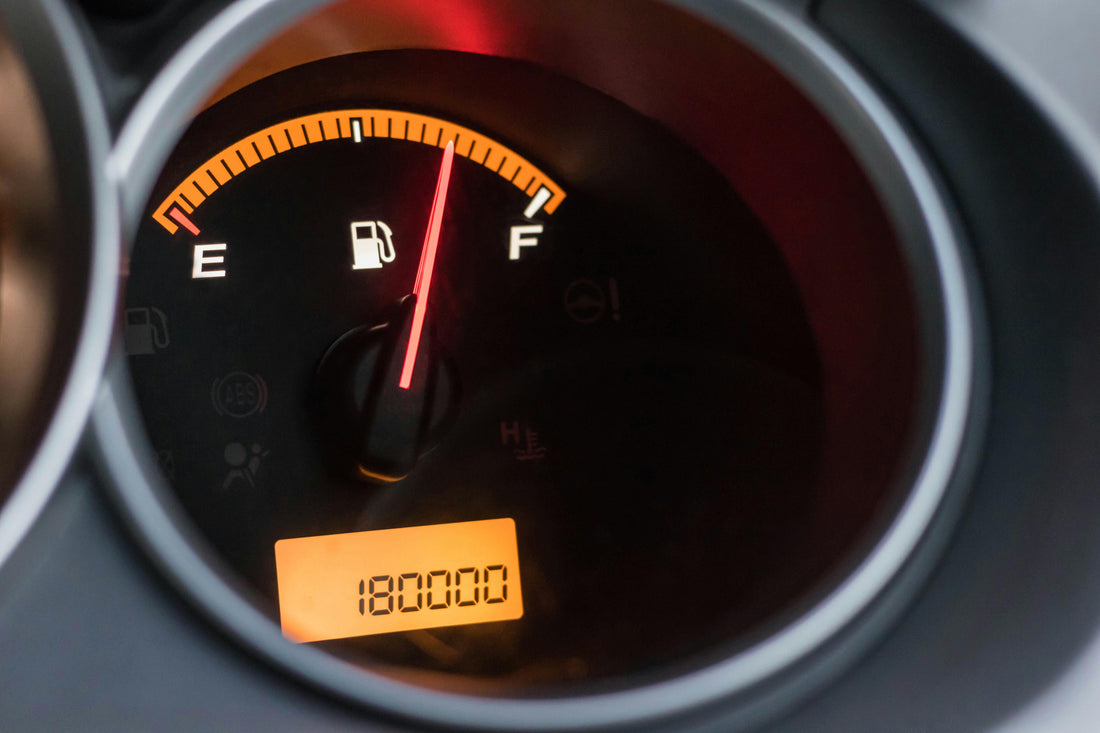
You glance down at your dashboard and notice the fuel gauge is stuck on empty, even though you just filled up. Or maybe it is sitting on full and never moves. Either way, you have no idea how much gas is actually in the tank, and that is a problem you need to fix before you end up stranded.
The good news: a fuel gauge that is not working correctly usually comes down to one of three causes. The fuel sending unit, a wiring or grounding issue, or a failed instrument cluster circuit board. This guide will walk you through all three so you can figure out which one you are dealing with and what to do about it.
Cause #1: Fuel Sending Unit Failure (The Most Common Cause)
If your gas gauge is not working, this is the first thing to check. The fuel sending unit is by far the most common reason a fuel gauge stops reading correctly, and it is the culprit in the majority of cases.
What is a Fuel Sending Unit?
The sending unit sits inside your gas tank, attached to the fuel pump assembly. It has a float (a small buoyant arm) connected to a variable resistor. As the fuel level changes, the float moves up or down, which changes the electrical resistance sent to the instrument cluster. The cluster reads that resistance and moves the gauge needle accordingly.
Over time, the resistor strip inside the sending unit wears out. The contact point on the float arm physically rubs across this strip every time the fuel level changes, and after years of use, it develops dead spots. When the contact hits a worn section, the gauge gets no signal or an incorrect one.
Symptoms of a Bad Sending Unit
- Gauge stuck on empty: The most common symptom. The resistor has worn to a point where it sends no signal.
- Gauge stuck on full: Less common, but happens when the float arm gets physically stuck or the resistor fails in a way that sends maximum resistance.
- Gauge bouncing or reading erratically: The resistor strip has intermittent dead spots, so the signal cuts in and out as fuel sloshes around.
- Gauge reads wrong: Shows half a tank when you know it should be full, or drops to empty way too fast. The resistor is partially worn, giving inaccurate readings.
How to Test the Sending Unit
You will need a multimeter and your vehicle's factory resistance specs (check your repair manual or search for your specific year and model).
- Locate the fuel sending unit connector at the top of the fuel tank. On most vehicles, you can access it from under the rear seat or near the tank.
- Disconnect the electrical connector from the sending unit.
- Set your multimeter to measure resistance (ohms).
- Measure the resistance across the sending unit terminals.
- Compare the reading to your vehicle's specification. Most sending units should read somewhere between 10-180 ohms or 33-240 ohms depending on the manufacturer.
- If the resistance is out of range, stuck at one value, or reads open/infinite, the sending unit is bad.
The Fix
Replace the fuel sending unit. The part typically costs between $50 and $200 depending on your vehicle. On many trucks and SUVs, you can access the sending unit from inside the cab by removing the rear seat and an access panel. On some vehicles, the tank needs to come down, which adds labor time.
This is not a repair we offer since it is a mechanical part inside the tank. But we want you to check this first because it is the most likely cause, and we would rather you spend $100 on a sending unit than send us a perfectly good instrument cluster.
Cause #2: Wiring or Grounding Issue
If the sending unit tests fine, the next thing to check is the wiring between the sending unit and the instrument cluster. A bad ground or corroded connector can cause the exact same symptoms as a failed sending unit.
What to Look For
- Corroded connectors: The connector at the fuel tank is exposed to road spray, salt, and moisture. Over time, corrosion builds up on the pins and prevents a clean electrical signal.
- Bad ground connection: The instrument cluster and sending unit both need a solid ground to function. A loose or corroded ground wire can cause the gauge to read incorrectly or not at all.
- Damaged wiring: Rodents, road debris, or rubbing against frame components can damage the wiring harness between the tank and the dash.
How to Check
- Inspect the connector at the fuel tank for green or white corrosion on the pins. Clean it with electrical contact cleaner if needed.
- Check the ground wire connection at the instrument cluster. Refer to your wiring diagram for the specific ground point.
- Use your multimeter to verify continuity from the sending unit connector all the way to the instrument cluster connector. If you get an open circuit, there is a break somewhere in the wire.
The Fix
Clean corroded connectors with contact cleaner, tighten loose ground connections, or repair any damaged wiring. This is usually a straightforward fix once you find the problem area.
Cause #3: Instrument Cluster Circuit Board Failure
If the sending unit tests good and the wiring checks out, the problem is inside the instrument cluster itself. The circuit board that processes the resistance signal from the sending unit has failed, and the gauge can not display an accurate reading.
This is where we come in.
How the Cluster Causes Fuel Gauge Problems
Every modern instrument cluster has a circuit board with components that interpret signals from various sensors, including the fuel level sender. When these components fail, the gauge stops responding even though the sending unit is working perfectly. On some vehicles, the stepper motor that physically drives the gauge needle wears out. On others, the circuit board itself develops cracked solder joints or failed components.
Vehicles Where Cluster Failure is Extremely Common
Fuel gauge failure caused by the instrument cluster is the number one complaint on certain vehicles. If you own one of these, there is a very good chance your cluster is the problem:
Nissan vehicles (fuel gauge is the #1 cluster issue):
- 2002-2004 Nissan Frontier / Xterra
- 2005-2018 Nissan Frontier / Pathfinder
- 2004-2006 Nissan Altima
- 1998-1999 Nissan Maxima
- 2000-2003 Nissan Maxima
GM trucks and SUVs (stepper motor failure causes gauge problems across the board):
Ford trucks (gauge and display failures):
Dodge trucks:
Cluster-related fuel gauge failure can happen on virtually any vehicle with an electronic instrument cluster. If your make and model is not listed above, check our full catalog or give us a call.
How to Tell Which Cause It Is: Simple Diagnostic Steps
Follow these steps in order. Each one rules out a cause so you can zero in on the actual problem.
Step 1: Test the Fuel Sending Unit
Disconnect the sending unit connector at the fuel tank. Measure resistance with a multimeter. If the reading is out of spec, stuck at one value, or shows open/infinite resistance, replace the sending unit. If the resistance is within spec and changes when you move the float arm, the sending unit is good. Move to Step 2.
Step 2: Check Wiring and Grounds
Inspect the connector at the tank for corrosion. Check ground connections at the cluster. Test for continuity from the sending unit connector to the cluster. If you find corrosion, a broken wire, or a bad ground, repair it. If everything checks out, move to Step 3.
Step 3: It Is the Instrument Cluster
If the sending unit is good and the wiring is clean, the problem is the instrument cluster circuit board. This is not something you can fix with a multimeter and some wire. The cluster needs professional repair at the board level.
That is exactly what we do at CBoardRepair.
Our Instrument Cluster Repair Service
We specialize in instrument cluster circuit board repair. If your fuel gauge is not working because of a cluster failure, here is what to expect when you work with us:
- Mail-in service: Ship your cluster to us from anywhere in the country. No need to find a local specialist.
- 24-hour turnaround: We repair and return ship within one business day of receiving your cluster.
- Lifetime warranty: Our repair covers the faults we fix for as long as you own the vehicle.
- 331 five-star reviews: Our customers trust us with their dashboards, and the reviews speak for themselves.
- Upgraded components: We do not just fix the broken part. We replace and upgrade known failure points so the problem does not come back.
- Original mileage preserved: Your odometer reading stays intact. No dealer reprogramming needed after reinstallation.
Find Your Vehicle
Click the link for your specific vehicle to see pricing and order your repair:
- Nissan Frontier/Xterra: 2002-2004 | 2005-2018
- Nissan Altima: 2004-2006
- Nissan Maxima: 1998-1999 | 2000-2003
- Chevy Silverado: 1999-2002 | 2003-2006
- Chevy Tahoe: 2003-2006
- Chevy Suburban: 2003-2006
- Ford F-150: 2004-2008
- Dodge Ram: 2004-2009
Do not see your vehicle? Browse our full instrument cluster repair catalog or call us at 417-241-4456. We service most makes and models.
Frequently Asked Questions
Can I drive with a broken fuel gauge?
Technically yes, but it is risky. Without an accurate fuel gauge, you are guessing how much gas you have. Running out of fuel is inconvenient at best and can damage the fuel pump on some vehicles since the pump uses fuel for cooling.
How much does it cost to fix a fuel gauge?
It depends on the cause. A fuel sending unit replacement runs $50 to $200 for the part plus labor. A wiring repair could be under $100 if you do it yourself. An instrument cluster repair through our service varies by vehicle but is typically a fraction of what a dealer charges for a replacement cluster.
Why does my fuel gauge work sometimes but not others?
Intermittent readings almost always point to a worn sending unit with dead spots on the resistor strip, or a loose connection somewhere in the circuit. As fuel sloshes around, the float moves the contact across the worn area, causing the gauge to cut in and out.
My fuel gauge stopped working after replacing the fuel pump. What happened?
This is surprisingly common. During fuel pump replacement, the sending unit connector can get damaged, a wire can get pinched, or the new pump assembly might not be fully seated. Check the connector first, then verify the sending unit resistance matches spec.
